June 7, 2026
Anxiety-Induced Insomnia: How to Stop Racing Thoughts at Night
Mindful Team
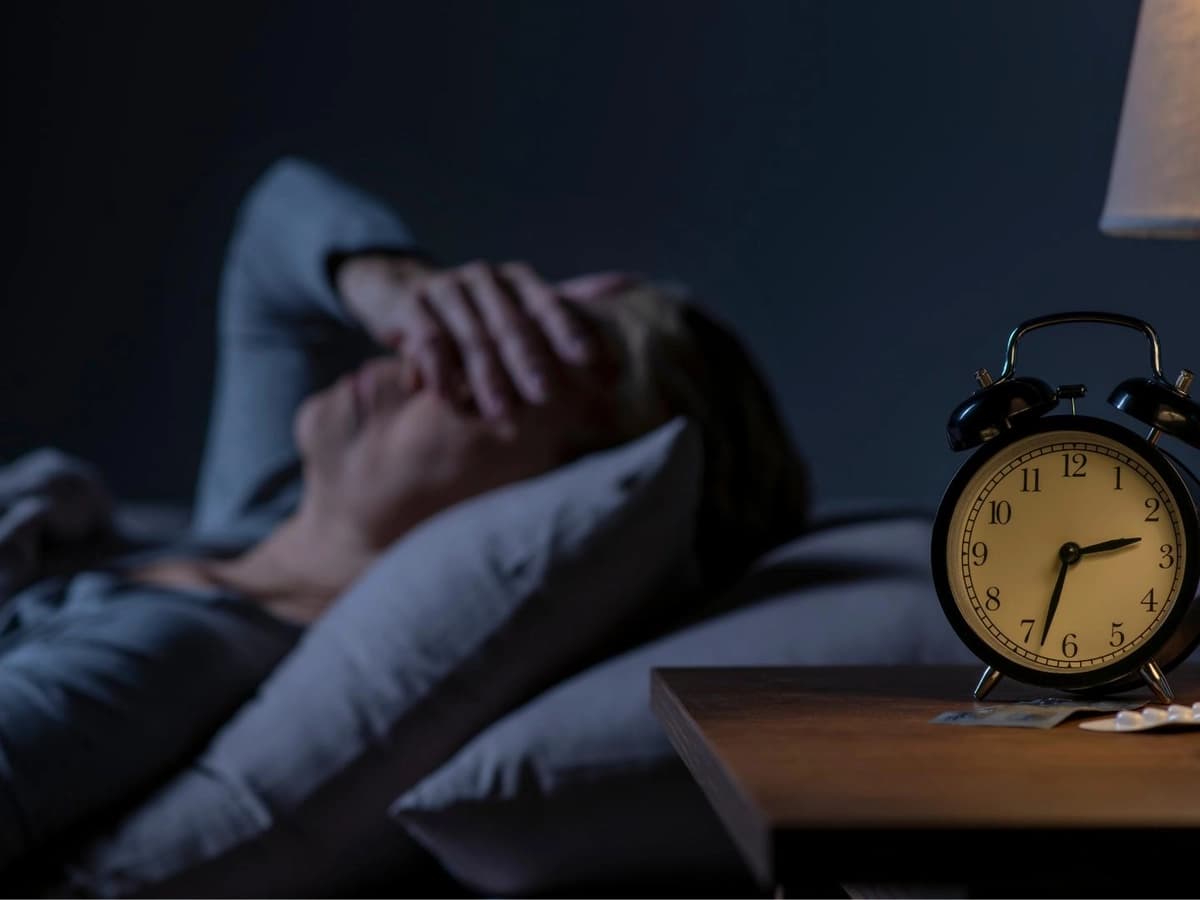
Calm your hyperarousal state tonight. This checklist reveals physical relaxation techniques to conquer anxiety-induced insomnia remedies fast.
When racing thoughts take over, the bed stops being a place of rest and starts feeling like a courtroom where you are both the defendant and the judge. This is the frustrating reality of anxiety-induced insomnia. This cycle of exhaustion and overthinking is incredibly common, but it is not something you have to live with forever. By looking at why the mind speeds up when the lights go down, you can learn specific ways to quiet the noise and finally get the rest you need.
What Is Anxiety-Induced Insomnia?
Anxiety and sleep have a complicated relationship where one almost always influences the other.
Anxiety-induced insomnia happens when worry and overthinking make it hard to fall asleep or stay asleep. Unlike a physical ailment, the root cause is mental arousal. You might find yourself staring at the ceiling for hours, waking up multiple times throughout the night, or opening your eyes at 4 a.m., unable to drift back off. Even when you do sleep, you likely wake up feeling tired because your brain never truly enters a deep, restorative state.
This creates a "vicious cycle." You feel anxious, so you cannot sleep. Because you didn't sleep, you feel more stressed and sensitive the next day. By the time evening rolls around, you start worrying about whether you will sleep tonight, which creates even more anxiety. It is a loop that feeds itself, making the bed a source of dread rather than comfort.
What Are Racing Thoughts at Night?
Racing thoughts are more than just thinking about your day; they are fast, repetitive, and often feel impossible to stop. They jump from one topic to another without any resolution.
Most people find their nighttime worries fall into a few categories:
- Work and Productivity: Thinking about missed emails or upcoming deadlines.
- Social Interactions: Replaying awkward moments or wondering if someone is mad at you.
- Health and Safety: Checking your pulse or worrying about a minor physical symptom.
- The Future: Imagining "worst-case scenarios" for things that haven't happened yet.
Normal Worry vs. Racing Thoughts
Everyone worries sometimes, but racing thoughts are different. They feel intrusive and intense. While normal worry might lead to a quick solution, racing thoughts are circular. They don't lead to answers; they only lead to more questions. If these thoughts happen most nights, last for hours, and cause physical distress like a racing heart, they have moved into the territory of clinically significant anxiety.
Why Anxiety Gets Worse at Night
It seems unfair that your brain waits until you are exhausted to bring up every problem in your life. However, there are very specific reasons why the night acts as a megaphone for your worries.
- One major reason is the lack of distractions. During the day, you have chores, work, music, and people to talk to. These things keep your "mental shelf" full. At night, the room is dark and quiet. With nothing else to focus on, your brain finally has the space to bring up all the unresolved stress it pushed aside during the day.
- Another factor is conditioned association. If you spend many nights tossing and turning, your brain starts to link the bed with being awake and upset. Instead of the bed triggering a "sleep" response, it triggers an "alert" response. You may also start to misinterpret your body's signals. A slight increase in heart rate or a twitch in your leg gets noticed because of the silence, leading you to think something is wrong, which spikes your adrenaline.
- Finally, there is the "performance anxiety" of sleep. You start doing math: "If I fall asleep right now, I'll get six hours. If I wait another hour, I'll only get five." This pressure to sleep actually keeps you awake because your brain views sleep as a goal you are failing to reach.
The Science Behind Anxiety and Insomnia
To stop the racing thoughts, it helps to know what is happening inside your body. Sleep is a passive process, but anxiety is an active one that prepares you for action.
When you are anxious, your body enters "fight-or-flight" mode. It releases chemicals like cortisol and adrenaline. These hormones are great if you need to run away from a predator, but they are terrible for sleep. They increase your heart rate, sharpen your senses, and keep your brain in a state of hyperarousal.
In this state, your nervous system is too "hot" to cool down for sleep. Chronic stress can actually reshape how you sleep over time, making your brain stay in lighter stages of sleep so it can "guard" you against perceived threats. You aren't just "tired"; you are "tired and wired."
Step 1: Shift Your Relationship with Thoughts
The biggest mistake people make is trying to force their thoughts to stop. The harder you fight a thought, the more power you give it. Shifting how you view your mind can change everything.
Start by practicing acceptance. Instead of getting angry that you are thinking, acknowledge it. Say to yourself, "My brain is trying to protect me by scanning for problems, but I am safe right now." This takes the "fight" out of the situation. You can also try to distinguish between facts and stories. A fact is "I have a meeting tomorrow." A story is "I am going to fail that meeting and lose my job."
Remember, you do not have to solve your life's problems at 2 a.m. Your brain is not at its best when it is sleep-deprived. Give yourself permission to be "off duty." Tell your mind that you will look at these issues in the morning when you are actually capable of fixing them.
Step 2: Quiet the Mind with Cognitive Tools
Specific mental exercises can help move the "noise" out of your head and onto paper, giving your brain permission to let go for the night.
Write a Worry Journal
Keep a notebook and pen by your bed. If you can't stop thinking about tasks or worries, turn on a dim light and write them down. Once they are on paper, your brain no longer has to use energy to "remember" them. Next to each item, write a simple next step, like "I will call the bank at 10 a.m." This gives the thought a finish line.

Schedule Worry Time
This sounds strange, but it works. Set aside 15 to 20 minutes in the late afternoon specifically to worry. During this time, think about everything that bothers you. Write it down and look for solutions. If a worry pops up at night, tell yourself, "I already handled this during worry time," or "I will save this for tomorrow's worry session." This trains your brain to keep stress within a specific "container."
Identify Mind Traps
Anxiety often uses "catastrophizing"—taking a small problem and imagining the absolute worst outcome. When you catch yourself doing this, stop and ask: "Is this thought 100% true?" Replace the scary thought with a balanced one. Instead of "I'll never sleep again," try "I'm having a hard night, but I have survived hard nights before, and I will get through tomorrow."

Step 3: Practice Physical Relaxation Techniques for Rest
Since the mind and body are linked, relaxing your muscles can signal to your brain that it is safe to turn off the stress response.
- Breathing Protocols: Try the 4-7-8 method. Inhale for 4 seconds, hold for 7, and exhale slowly for 8. The long exhale is the most important part because it physically slows your heart rate and activates the "rest and digest" system.
- Progressive Muscle Relaxation (PMR): Start at your toes. Tense them as hard as you can for five seconds, then release. Move to your calves, then thighs, and all the way up to your face. This helps you notice where you are holding tension so you can let it go.
- The 5-4-3-2-1 Grounding Method: If your mind is spinning, ground yourself in the room. Silently name 5 things you can see, 4 things you can touch, 3 things you can hear, 2 things you can smell, and 1 thing you can taste. This pulls your focus away from the "future" or "past" and back into the present moment.
Step 4: Re-Train Your Brain with Behavioral Strategies
Sometimes, the way we act when we can't sleep actually makes the insomnia worse. Changing your habits around the bed can break the cycle of anxiety.
One of the Best Tools Is Stimulus Control
If you have been lying awake for more than 20 minutes and feel agitated, get out of bed. Go to another room, keep the lights low, and do something boring like reading a dry book or folding laundry. Do not use your phone. Only go back to bed when you feel sleepy. This stops your brain from associating the bed with the "tossing and turning" struggle.
Consistency Is Also Key
Even if you had a terrible night, wake up at the same time every morning. This keeps your internal clock steady. Avoid long naps during the day, as they steal the "sleep drive" you need for the following night. Also, try to stop checking the clock. Seeing "3:14 a.m." triggers a fresh wave of panic. Turn the clock around so you cannot see the numbers.
Step 5: Create a Better Wind-Down Routine
The hour before you go to bed determines how your brain will behave once the lights are out. You need a "buffer zone" between the stress of the day and the quiet of the night.
About 60 to 90 minutes before bed, start a digital sunset. Put away your phone and laptop. The blue light from screens suppresses melatonin, but the content (social media, news, work emails) is even worse for anxiety. It keeps your brain in "active mode."
Instead, choose low-stimulation activities. This could be a warm shower, listening to a calm podcast, or light stretching. Avoid heavy meals or caffeine in the late afternoon. The goal is to send a clear signal to your body: "The day is over, and there are no more threats to deal with."
When to Seek Professional Support
While self-help tools are powerful, they are not always enough. Sometimes anxiety and sleep issues are deep-seated and require a helping hand from a professional.
If your lack of sleep is making it hard to work, drive, or maintain relationships, it is time to talk to a doctor or therapist. You should also seek help if you experience panic attacks at night or if you feel a sense of hopelessness.
There are very effective treatments available. Cognitive Behavioral Therapy for Insomnia (CBT-I) is the gold standard. It doesn't just give you a "pill" to mask the symptoms; it helps you change the thoughts and behaviors that keep you awake. In some cases, a doctor might suggest temporary medication to help you get over the hump, but this is usually best when combined with the mental tools mentioned above.
Conclusion
Managing anxiety-induced insomnia is about lowering the "volume" of your thoughts and the "heat" in your body. You don't need to be a perfect sleeper to start seeing improvements.
- Accept your thoughts instead of fighting them.
- Use a worry journal to move stress out of your head.
- Get out of bed if you are awake and frustrated to break the bad association.
- Focus on your breath to physically calm your nervous system.
- Keep a steady schedule to help your internal clock find its rhythm.
Changing these patterns takes time, but every small step helps. With patience and the right tools, you can turn your bedroom back into a sanctuary of rest.
FAQs
Q1: Are racing thoughts at night a sign of an anxiety disorder?
Occasional racing thoughts happen to everyone, especially during stressful times. However, if they happen almost every night and keep you from functioning during the day, they could be a sign of an anxiety disorder. A professional evaluation can help determine if there is an underlying condition that needs attention.
Q2: Should I get out of bed when my mind won't stop racing?
Yes. If you stay in bed while feeling panicky, you train your brain to stay alert in bed. Getting up and doing something quiet in dim light helps reset your brain. You should only return to bed once you feel that heavy-eyed sense of sleepiness.
Q3: Can breathing or relaxation really help if my thoughts feel "too strong"?
Relaxation techniques aren't meant to "delete" your thoughts. Their job is to lower your physical stress levels. When your heart rate slows and your muscles relax, your thoughts become less "sticky" and easier to ignore. It takes practice, so try it even on nights when you feel okay.
Q4: When should I see a professional about anxiety-induced insomnia?
If your sleep struggles last longer than a month or if you feel like you are at your "wits' end," see a doctor. Seeking help is a smart move that can save you months of frustration. Treatments like CBT-I are highly successful for most people.

Written by
Mindful Team